Digitalisation and robotics go beyond software applications
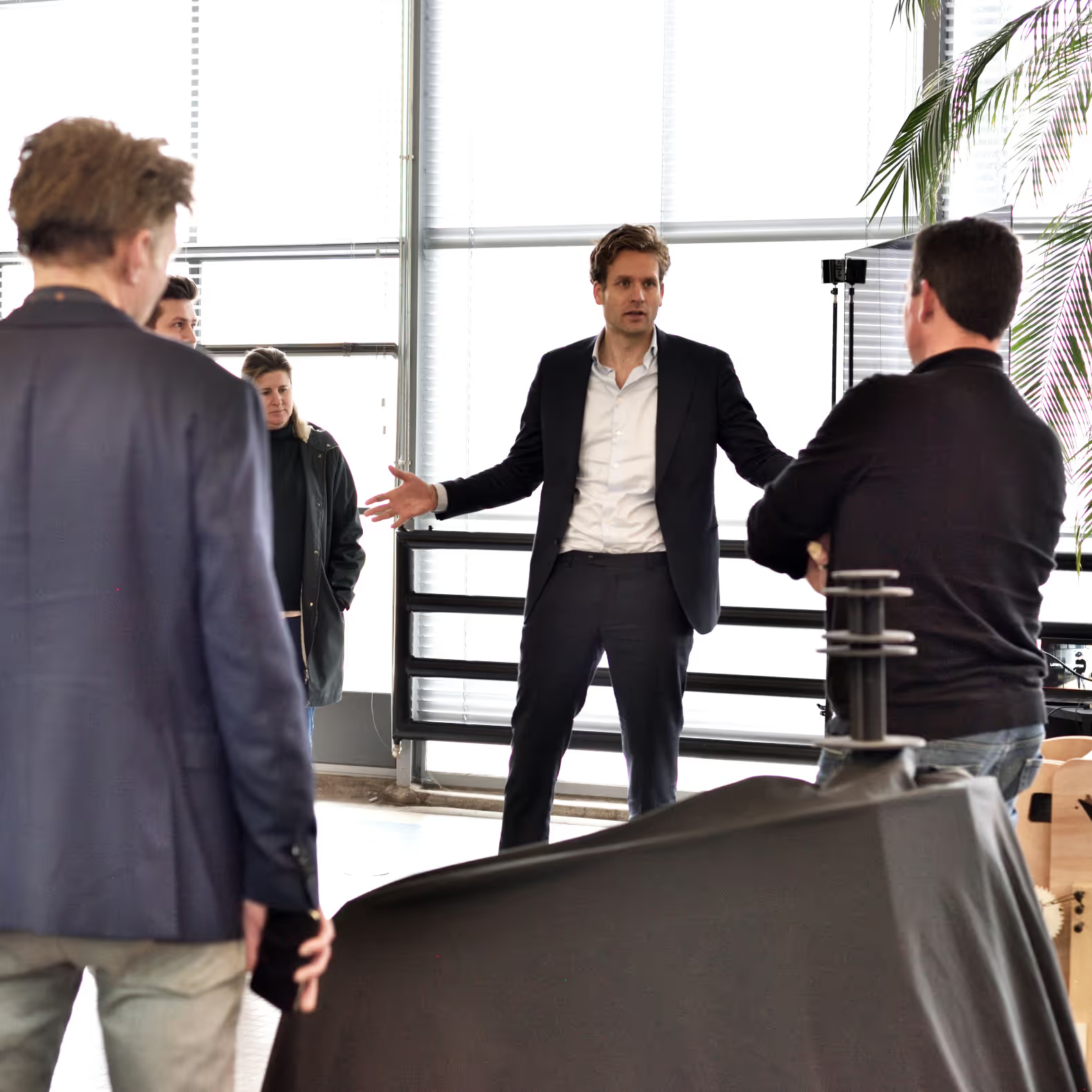
Sparker Hugo Honijk was recently interviewed for a feature in the publication The Future of Manufacturing, featured in the Financieele Dagblad. It is a theme that closely connects to what we work on every day at Spark: developing and improving meaningful, sustainable products that are technically feasible, manufacturable and valuable in practice.
In the interview, Hugo discusses the increasing complexity of product development, the transition from prototype to scalable product, and the growing role of AI in this process. His main message is clear: a good idea alone is not enough. Successful innovation emerges when design, engineering, user needs and manufacturability are considered together from the very beginning. This is how products are created that are not only innovative, but also reliable, scalable and valuable in real-world use.


“A good idea is not yet a product”
Innovative product development is about more than having a clever idea. A product must be reliable and affordable, and it needs to be accepted by its users. Increasingly, it is the transition from prototype to scalable application that determines whether an innovation actually reaches the market.
Product development is becoming increasingly complex, says Hugo Honijk, Partner and Director Smart & Robotics at Spark design & innovation, which is active in medical technology, robotics and industrial applications. This is mainly because mechanics, electronics and software are becoming increasingly interconnected.
At the same time, requirements regarding certification and safety are becoming more demanding. As a result, design decisions need to be considered together much earlier in the development process.

People need to want to use the product, and it has to fit within a healthy business case. You also need to be able to manufacture it reliably and reproducibly. Otherwise, all you have really demonstrated is that an idea is technically possible.”
Challenges often arise during scaling. A prototype can be modified relatively easily, but once a product moves into series production, decisions regarding assembly and manufacturing methods start to have significant financial consequences. Certification also needs to be in place. This is why companies involve Spark both at an early stage of an innovation project and later on, when an existing concept needs to be developed into a production-ready product.
By aligning different disciplines from the start, costly changes later in the development process can be avoided. For example, if a housing is designed first and the electronics are integrated afterwards, dimensions and technical requirements may still force major design changes.
“From the beginning, we manage the key development tracks in parallel. This allows us to identify earlier where design decisions influence one another and which risks need to be addressed first. It helps prevent having to go back to the drawing board later.”
Physical models
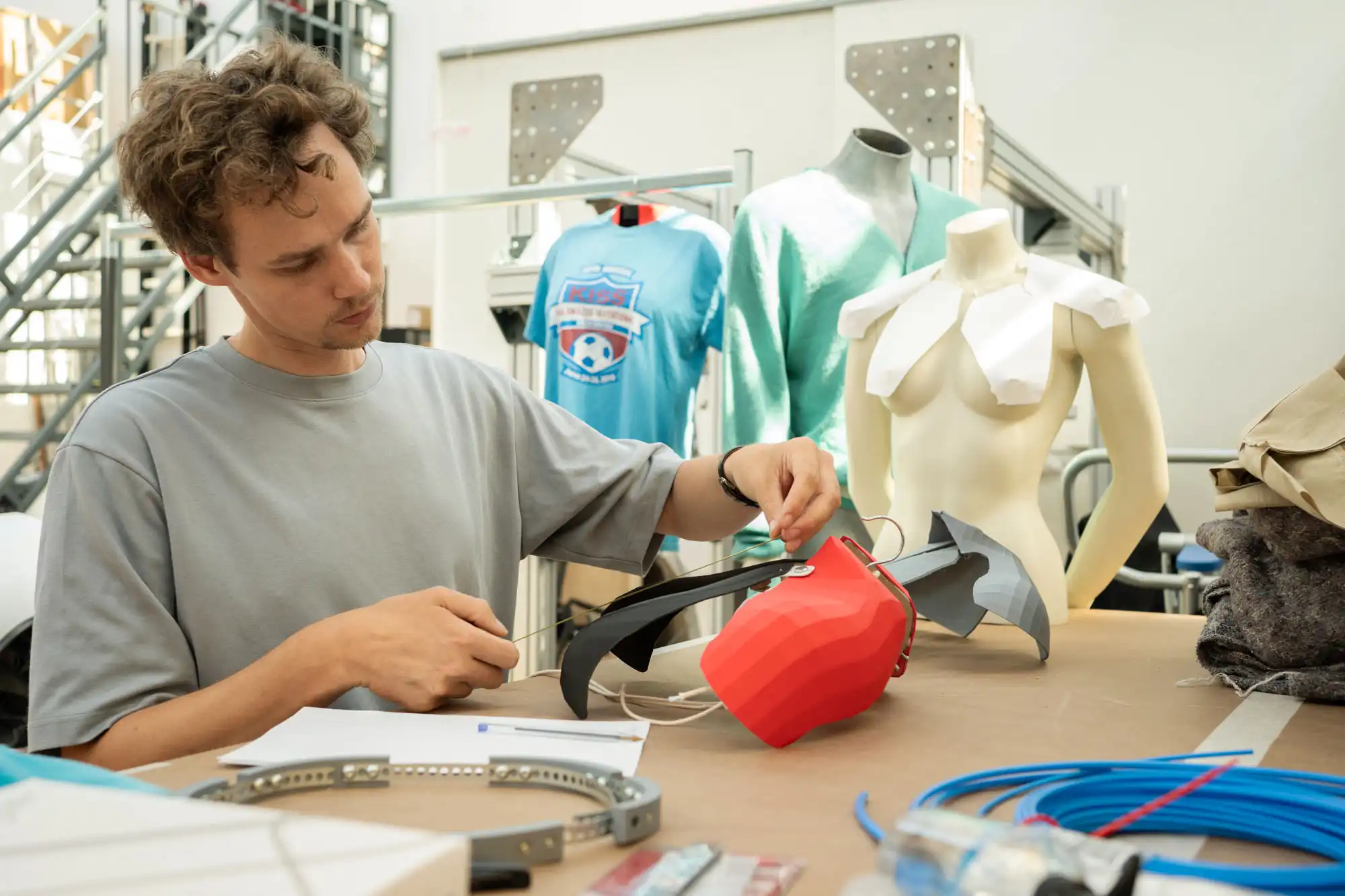
Throughout the process, it is crucial to continuously test, validate and improve prototypes. Not every prototype needs to be technically complete. Sometimes, a simple physical model is enough to evaluate dimensions and understand how users respond to a product.
As the development process progresses, models become more detailed. Components can then be tested using 3D printing or other manufacturing techniques, eventually using the intended production materials.
Physical products offer less room for correction after market introduction than software does. A software error can often be fixed with an update, whereas an error in a mould, for example, can require significant additional investment. Pilot series provide an important intermediate step: although more expensive, they make it possible to gain practical experience before committing to larger production investments.
AI
AI is also becoming increasingly influential within the design process. It can help develop ideas, generate alternatives and quickly visualise concepts. However, Honijk emphasises that the role of the designer remains essential.
“AI can significantly accelerate and broaden the creative process. But having more ideas does not automatically result in a better product. Human designers are still needed to make decisions, assess risks and validate solutions in practice.”
According to Honijk, this combination becomes even more significant with physical AI, where intelligence is integrated into physical products and robots. Technological possibilities are developing rapidly, but success still depends on usability, safety and trust.
Product development therefore remains a continuous balancing act between what is technologically possible and what delivers genuine value in practice.
Click here to read the full article.
.svg.png)